From SQL to trained model in 10 minutes
Walkthrough: connect a Postgres database, define a prediction task, and deploy a real model — no code.
- Category
- Tutorial
- Author
- Langsat Team
- Date
- Reading time
- 5 min
- Share
{ TODO: replace with real article. This is a Phase 2 mock. }
The 10-minute path
- Connect your database — Postgres, MySQL, or a Parquet upload
- Pick your target — any column in any table
- Train — we handle schema detection, feature engineering, and model selection
- Predict — via API, SQL function, or CSV batch
Example: predict churn from your production DB
{ TODO: embed real screenshots and API examples. }
The result is a model trained on your actual data, ready to call from your backend within minutes of connecting.
What you don’t have to do
No Python. No Jupyter. No feature store. No MLOps pipeline. Langsat handles the infrastructure so your team can focus on the business question.
Continue reading
 fundamentals
 Tabular vs Relational ML: When Each Wins
Tabular ML or relational deep learning? A plain-English guide to when single-table models beat multi-table graph models — and how to choose, backed by 2024–2025 research.
 fundamentals
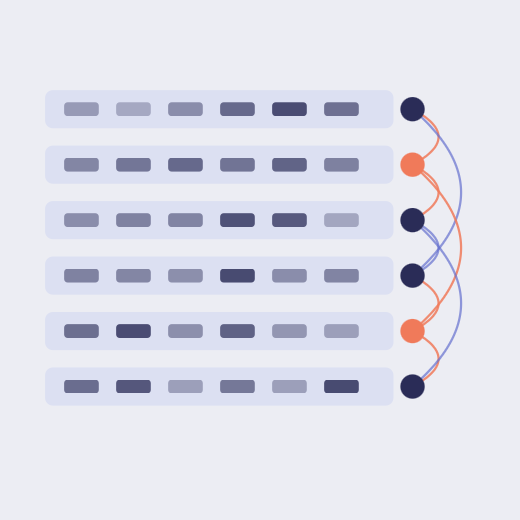
 Why GNNs Matter for Tabular Data
Why do graph neural networks beat flat models on business data? A plain-English look at message passing over your foreign keys — and the signal that flattening throws away.